Pain Management Physician vs Chiropractor After a Car Accident
A pain management physician is usually the better fit for complex pain, medication needs, injections, or deeper injury evaluation, while a chiropractor may help with movement and musculoskeletal care. Premier Injury Specialists compares both options and checks which care supports your symptoms and medical documentation.
Request an EstimateWhat’s the Difference Between a Pain Management Physician and a Chiropractor?
Pain management physicians evaluate and treat pain with medical care, while chiropractors focus mainly on movement and musculoskeletal function.
A pain management physician can assess a car accident injury, review your symptom history, and consider medical treatment for pain. A chiropractor focuses on spinal movement, joint mobility, muscle tension, and related musculoskeletal pain.
Both may support conservative treatment, but the right choice depends on your injury pattern, pain severity, and need for a broader medical evaluation.
Pain Management Physician vs Chiropractor: Quick Comparison
The better option depends on injury complexity, symptoms, treatment needs, and the records required after the crash.
We compare the roles below so you can match care with your symptoms and treatment goals.
| Factor | Pain Management Physician | Chiropractor |
|---|---|---|
| Treatment focus | Medical pain evaluation, medication management, and injection treatment | Spinal movement, joint mobility, and musculoskeletal care |
| Cost drivers | Evaluation needs, diagnostic review, medication, and procedures | Visit frequency, manual care, and rehabilitation needs |
| Treatment timeline | Depends on diagnosis, symptom response, and treatment plan | Depends on mobility limits, pain response, and rehabilitation goals |
| Maintenance care | Follow-up medical care when symptoms require monitoring | Follow-up movement care when it supports function |
| Best use | Severe, persistent, nerve-related, or complex pain | Muscle stiffness, joint discomfort, and movement limits |
What Does a Pain Management Physician Do After a Car Accident?
A pain management physician evaluates accident-related pain and builds medical treatment around its suspected source, severity, and effect on daily life.
We review symptoms such as whiplash, neck pain, back pain, and nerve pain. Radiating pain, numbness, and tingling can point to nerve involvement that needs careful assessment.
Medical care may include medication management, injection treatment, and follow-up evaluation. A clear treatment plan also helps create useful medical documentation for an insurance claim.
Our team can begin with an Auto Accident Injury Evaluation when accident-related symptoms need structured review.
Advantages of Seeing a Pain Management Physician
A pain management physician can connect complex symptoms with medical evaluation and non-surgical treatment choices.
We focus on how pain affects movement, sleep, work, and daily tasks before shaping follow-up care.
Best for: severe, persistent, nerve-related, or complex accident pain.
What Does a Chiropractor Do After a Car Accident?
A chiropractor focuses on movement, joint function, and musculoskeletal symptoms that can follow a collision.
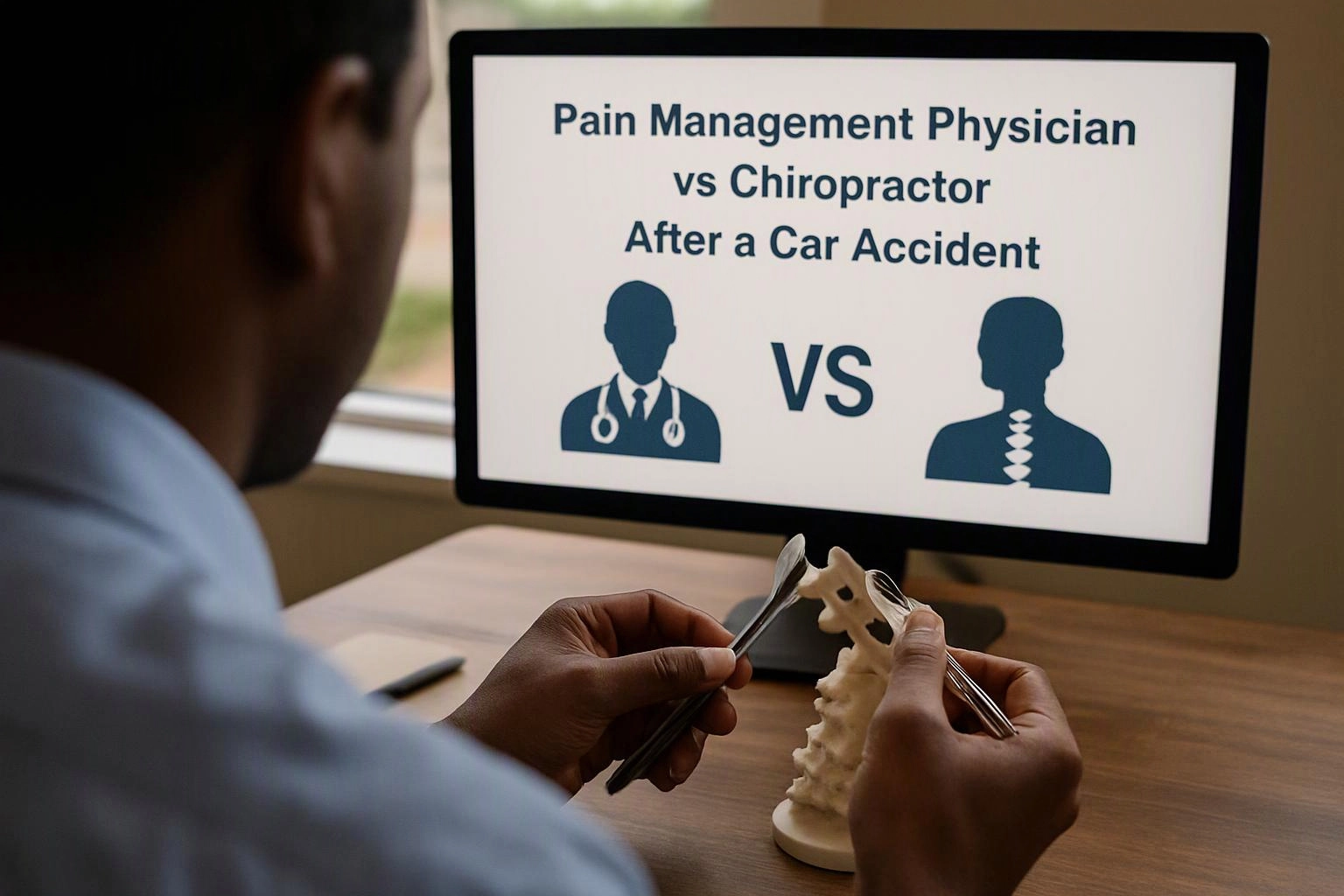
Chiropractic care may address spinal movement, joint mobility, muscle tension, and limited range of motion. Manual care can support rehabilitation when symptoms mainly involve stiffness or movement discomfort.
Whiplash symptoms can affect the neck, shoulders, and upper back. We consider how chiropractic care fits with the broader injury assessment and any needed medical follow-up.
Advantages of Seeing a Chiropractor
A chiropractor may help when accident symptoms mainly involve movement limits, muscle stiffness, or joint discomfort.
Movement-based care works best when it matches the injury pattern and stays coordinated with other treatment.
Best for: movement-related muscle and joint problems without signs that require broader medical evaluation.
Which Option Is Better for Your Accident Injuries?
A pain management physician is often the stronger starting point for severe, persistent, or complex symptoms, while chiropractic care may suit movement-related muscle and joint problems.
Pain severity, injury pattern, neurologic symptoms, and range of motion all matter. Numbness, tingling, radiating pain, or worsening weakness deserves medical attention.
Your treatment goals also guide the choice. We coordinate care when more than one type of treatment supports your recovery and medical documentation.
How We Evaluate the Right Next Step After a Crash
We review the accident history, symptoms, examination findings, and documentation needs before guiding the next step. Premier Injury Specialists offers Free Consultations for this discussion.
What Should Your Medical Records Document After a Car Accident?
Medical records should connect reported symptoms, examination findings, diagnoses, treatment, and changes in daily function to the accident.
Records should identify the date of injury and describe symptom progression. They should also note the treatment plan and response to care.
Work limitations and functional limitations matter because they show how neck pain, back pain, whiplash, or nerve pain affects daily life. Clear insurance documentation can also support care coordination and future follow-up.
Questions About Pain Doctors and Chiropractors After a Car Accident
Can you see a pain management physician and chiropractor after a car accident?
Yes, Premier Injury Specialists can help coordinate care when both medical pain evaluation and movement-based treatment fit the injury pattern.
Should I see a pain management physician for whiplash?
Yes, a pain management physician can be a strong choice when whiplash causes persistent neck pain, severe symptoms, or nerve-related complaints.
Can a chiropractor diagnose car accident injuries?
A chiropractor can assess musculoskeletal problems, but symptoms involving nerves, serious pain, or complex injuries may need physician evaluation.
When should accident-related pain be evaluated by a physician?
Accident-related pain should be evaluated by a physician when pain is severe, persistent, worsening, or linked with numbness, tingling, weakness, or radiating symptoms.
What symptoms suggest a car accident injury needs medical evaluation?
Severe pain, worsening symptoms, limited movement, numbness, tingling, weakness, and radiating pain suggest that medical evaluation is needed.
Premier Injury Specialists can review your symptoms, explain treatment options, and help guide the next step after a crash.
Get a Free EstimateRelated Resources
Whiplash Treatment After a Car Accident
What It SolvesHerniated Disc Treatment After an Auto Accident
What It SolvesBest Auto Accident Injury Evaluation Options for Urgent, Budget & Long-Term Projects in Stonecrest
What Goes With ItAuto Accident Injury Evaluation and Medical Documentation: What Comes First?