Auto Accident Injury Evaluation and Medical Documentation: What Comes First?
Auto accident injury evaluation comes first because the exam identifies symptoms, functional limits, and needed care. Premier Injury Specialists then organizes medical documentation to connect findings with the accident and guide ongoing treatment.
Request an Estimate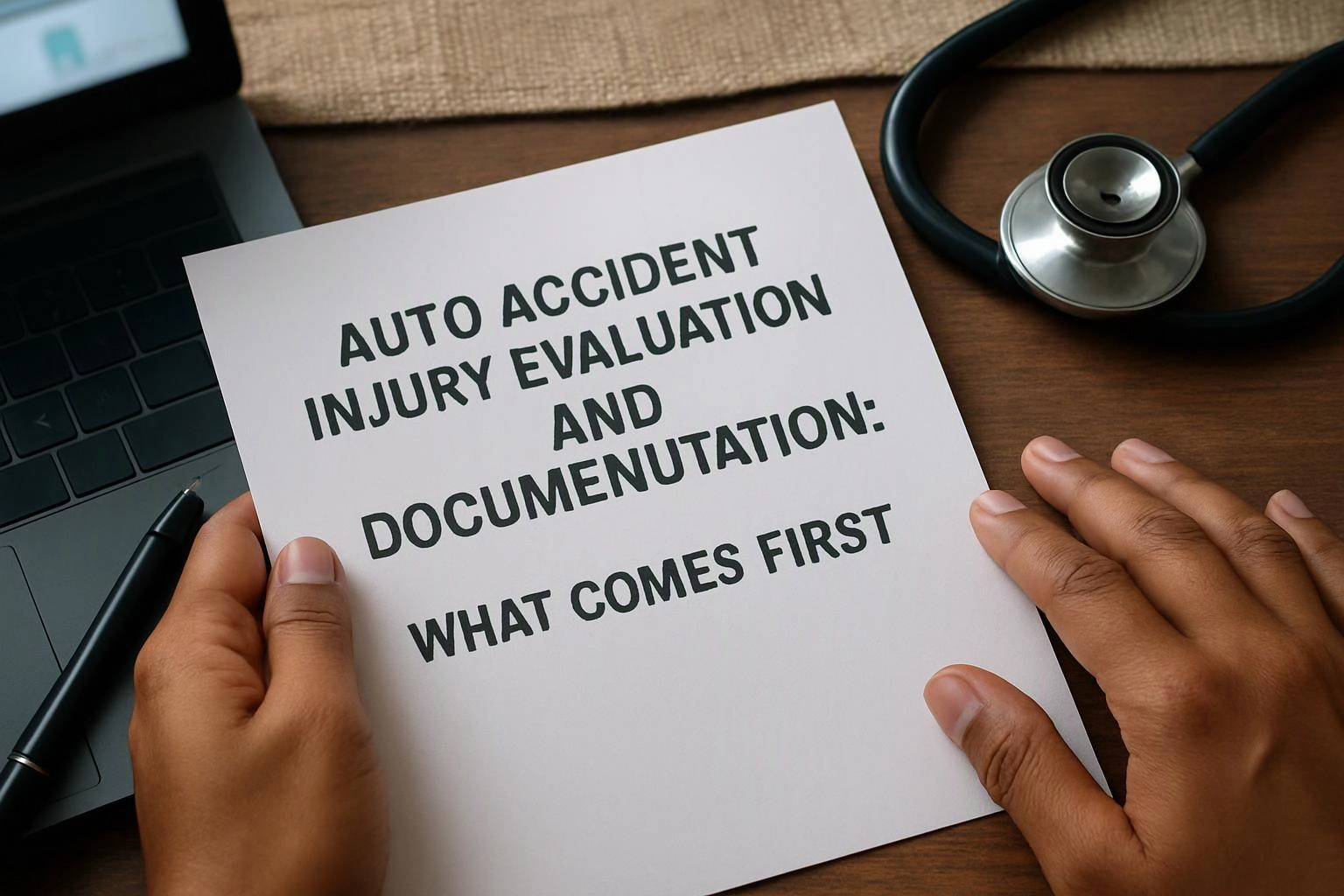
Why Evaluation Comes Before Medical Documentation
Auto accident injury evaluation comes first because clinical findings give medical documentation a clear basis. Premier Injury Specialists begins with your medical history and current concerns.
Our pain management physician performs a physical examination and reviews your symptoms. We also assess functional limitations, such as trouble walking, lifting, sleeping, or working.
These findings help us describe the injury clearly. They also help guide treatment recommendations and follow-up care.
When Do You Need Both Services Together?
Auto accident injury evaluation and medical documentation work together when symptoms need both clinical assessment and a clear written record.
We commonly use both services when any of these situations apply:
Our team connects the reported symptoms with the physical findings. We update the medical record as your condition changes.
How Evaluation and Documentation Work Together
Clinical evaluation and medical documentation work together through a sequence that links examination findings, treatment decisions, and supporting records.
Our team uses the following process:
Cost depends on the evaluation needs, documentation requested, and care involved. We explain what the requested work includes and how to obtain an exact quote from our team.
What Happens During an Auto Accident Injury Evaluation?
An auto accident injury evaluation reviews the accident, symptoms, medical history, and physical findings before care is planned.
We may review diagnostic testing when it helps explain your symptoms. Our findings guide treatment decisions and follow-up care.
What Should Medical Documentation Include?
Medical documentation should describe the reported symptoms, observed findings, diagnosis, treatment plan, and changes over time.
A complete record begins with the chief complaint and symptom history. It also includes physical examination findings and the diagnosis reached from the evaluation.
The treatment plan should explain recommended care and treatment goals. Follow-up notes should show progress, continuing concerns, and functional impact.
Clear documentation helps connect the accident history to the current injury assessment. It also supports continuity of care when additional testing or referrals are needed.
How Premier Injury Specialists Organizes Records After the Evaluation
Premier Injury Specialists organizes the evaluation findings and treatment records into a clear medical account. Our team connects clinical findings with treatment recommendations and follow-up documentation.
We review the medical record for consistency across visits. We also note changes in symptoms, functional limitations, and response to care.
Our Free Consultations help patients understand the next step. You can contact our team to discuss your evaluation and records needs.
What Should You Bring to the Appointment?
Bring records and details that help us understand the accident and your current symptoms. These items can make the medical evaluation more complete.
Bring what you have, even if some information is incomplete. We can clarify the remaining details during the evaluation.
When Should You Request Additional Medical Records?
Additional medical records should be requested when earlier care, testing, or referrals affect the current injury evaluation.
Imaging reports can explain findings that affect the diagnosis or treatment plan. Emergency department records may describe the first symptoms and examination after the collision.
Primary care records can provide relevant medical history and prior conditions. Specialist notes and referral records can show earlier recommendations and support continuity of care.
We review these records when they add useful context to your current symptoms. Our team then includes relevant information in follow-up care and medical documentation.
Questions About Auto Accident Injury Evaluation and Medical Records
Can symptoms appear after an auto accident evaluation?
Yes, symptoms can appear or become clearer after an auto accident evaluation. Premier Injury Specialists documents new or changing symptoms during follow-up care.
What records should I bring after a car accident?
Bring accident details, prior medical records, imaging reports, medication information, and insurance documents when available.
Why do medical records matter after an auto accident?
Medical records matter because they show reported symptoms, clinical findings, diagnosis, treatment decisions, and changes over time.
Can previous medical conditions affect accident injury documentation?
Yes, previous medical conditions can affect accident injury documentation because they provide important context for current symptoms and clinical findings.
Auto accident injury evaluation gives medical documentation a clear clinical foundation. Premier Injury Specialists helps connect your accident history, symptoms, findings, and treatment plan.
Contact our team through a Free Consultation to understand the next step for your injury care.