
What Is a Nerve Root?
A nerve root is a short bundle of nerve fibers that leaves the spinal cord through an opening between the vertebrae. Each nerve root carries signals between the spinal cord and a specific area of the body. Irritation or pressure on a nerve root can cause pain, numbness, tingling, or weakness along its path. For more detail, see Herniated Disc Treatment After an Auto Accident.
Quick Facts About Nerve Root
Category
Spinal nerve structure
Used for
Locating radiating nerve pain
Common confusion
Not the same as a peripheral nerve
Also called
Spinal nerve root
Often discussed with
Selective Nerve Root Block
Key Takeaways About Nerve Root
- A nerve root connects the spinal cord with a body region.
- Irritation may follow a distinct path into an arm or leg.
- A nerve root is not the same as the spinal cord.
How Nerve Root Works
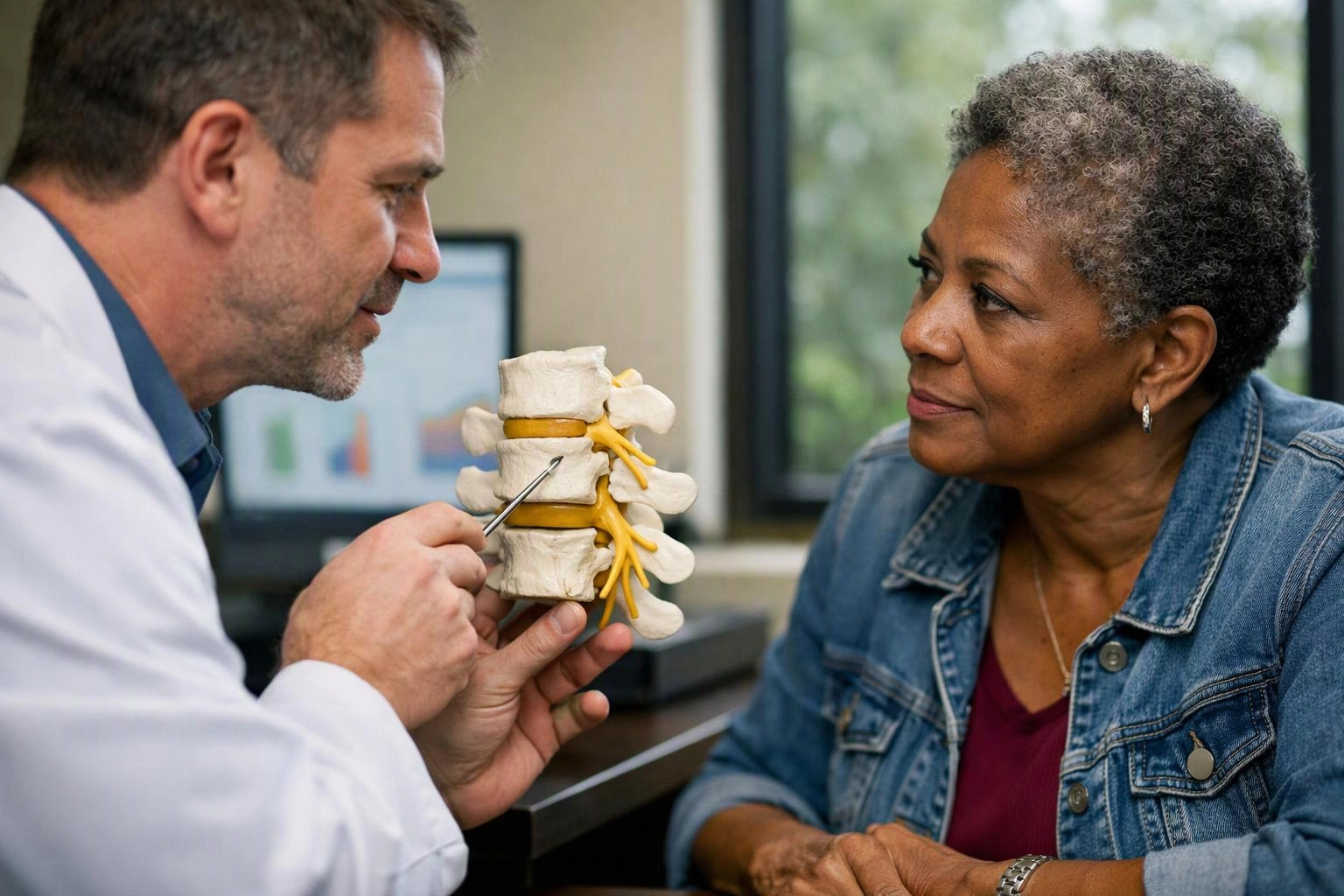
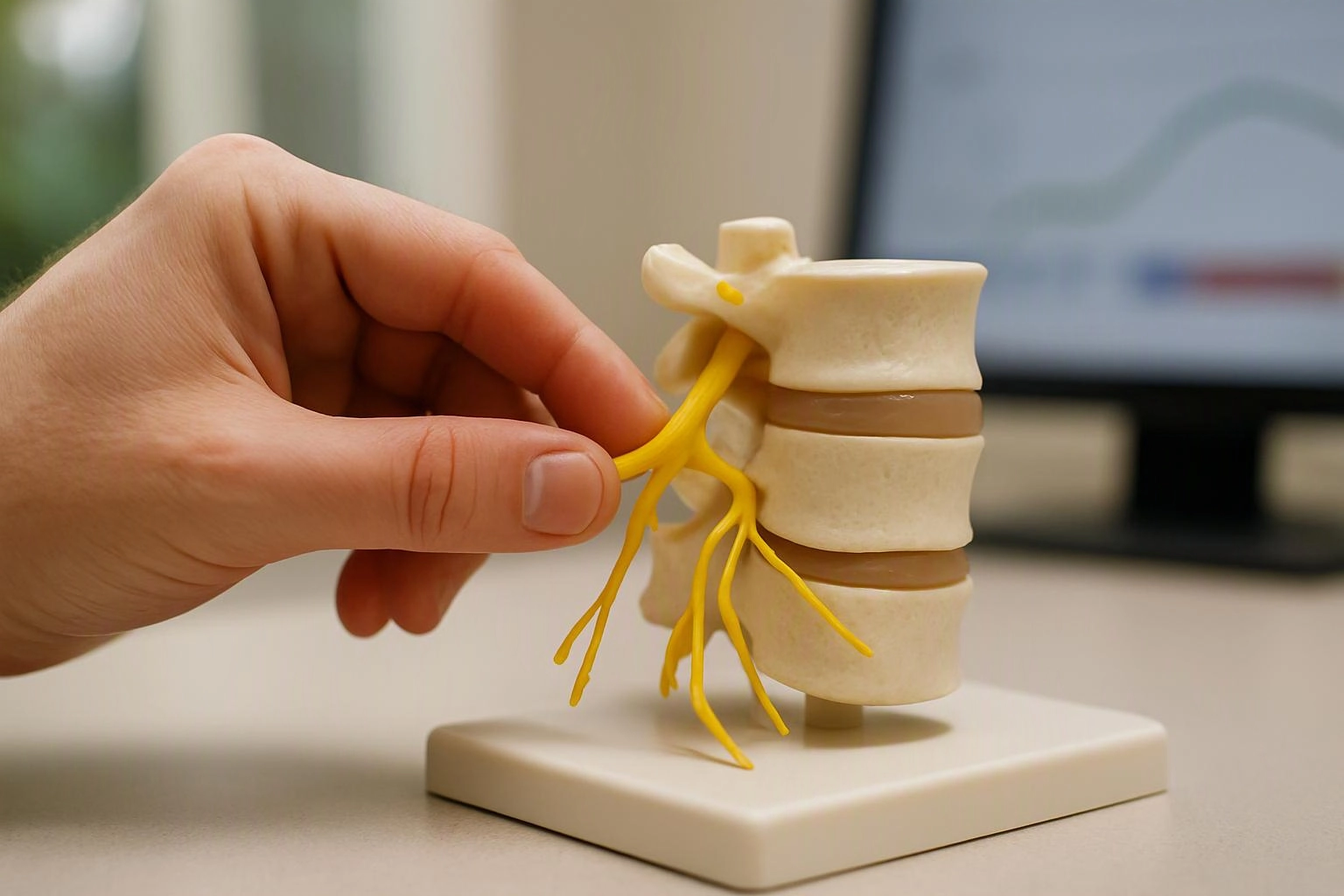
Nerve root fibers branch from the spinal cord and pass through openings in the spine. The fibers carry movement signals to muscles and sensory signals back to the spinal cord. Each root serves a related area, so symptoms may follow a recognizable path.
Related glossary terms: Lumbar Radiculopathy, Spinal Cord, Foraminal Stenosis.
Pressure or inflammation near a root may affect how signals travel. A clinician reviews the pain pattern, sensation changes, strength, and physical findings. Imaging may help show a disc problem, bone spur, or narrowed passage near the root.
How Selective Nerve Root Block Relates
A selective nerve root block places medicine near a specific nerve root. The procedure can help test whether that root contributes to symptoms and may reduce local inflammation. Fluoroscopy may guide needle placement during the procedure.
From the Premier Injury Specialists team
When we assess symptoms, we match the reported pain path with examination findings and available imaging. For a selective nerve root block, we identify the suspected level and use image guidance to place medication near that root. We also track the response to help clarify the pain source.
Nerve Root in Practice: A Real-World Example
A person with a lower back disc problem may feel pain that travels into the buttock and leg. A selective nerve root block can focus medication near the suspected root to assess its role in those symptoms.
Related Services
Related Terms
Lumbar Radiculopathy
Lumbar Radiculopathy is a nerve root problem in the lower spine that causes pain, tingling, numbness…
Spinal Cord
Spinal Cord is a long bundle of nerve tissue that carries messages between the brain and…
Foraminal Stenosis
Foraminal Stenosis is a narrowing of the openings between spinal bones where nerve roots leave the…
Image Guidance
Image Guidance is a technique that uses live medical images to help a clinician see body…
Premier Injury Specialists
Have Questions About Nerve Root?
Contact Premier Injury Specialists for practical guidance on Nerve Root and related pain management physician work in Stonecrest.