Epidural Steroid Injection vs. Selective Nerve Root Block for Sciatica and Radiculopathy
Epidural steroid injections treat inflammation across a broader space, while selective nerve root blocks target one suspected nerve. Premier Injury Specialists uses your symptoms, exam, and imaging to guide the safer, more useful option.
Request an Estimate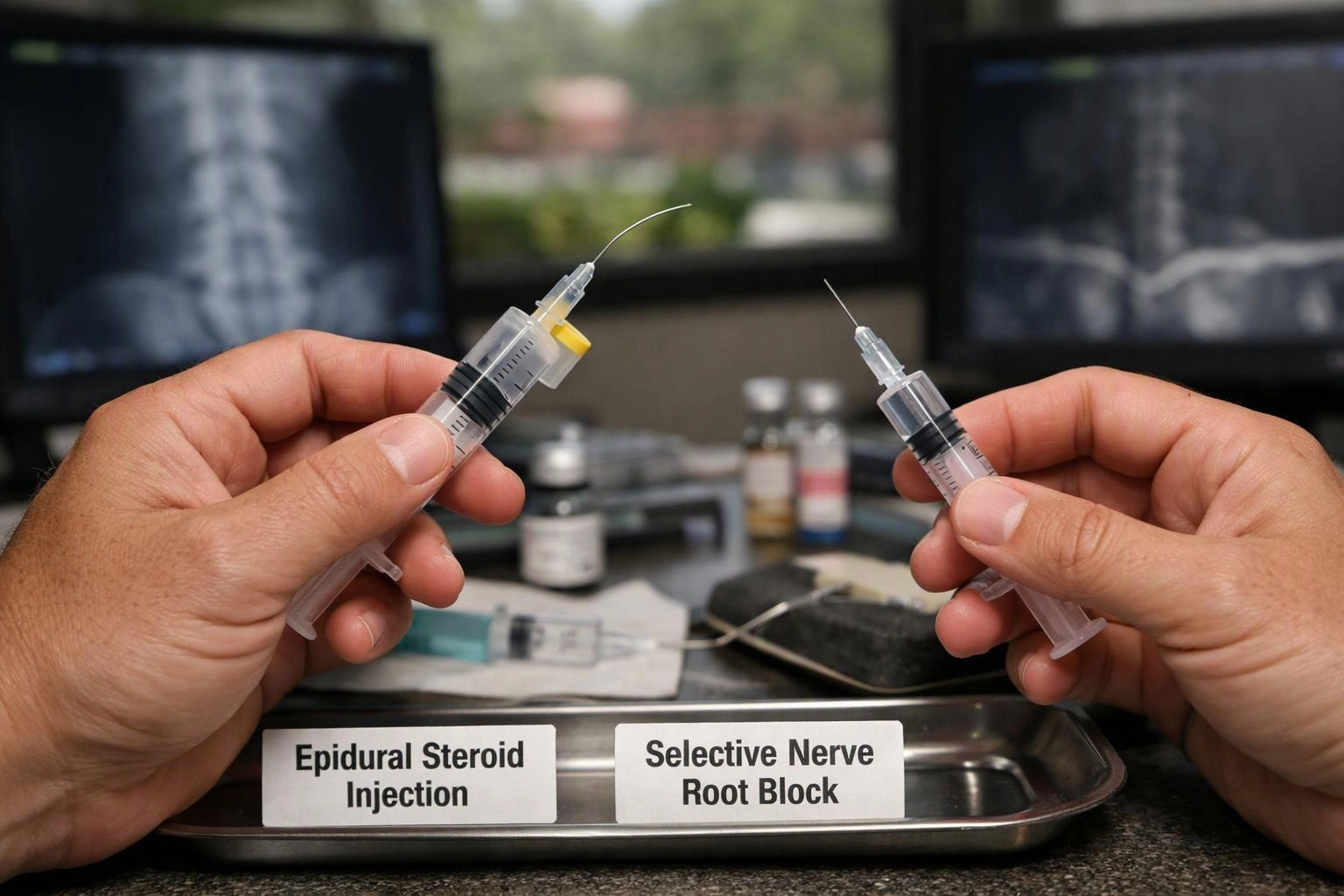
How Epidural Steroid Injections and Selective Nerve Root Blocks Differ
An epidural steroid injection reaches a broader epidural space, while a selective nerve root block focuses on one spinal nerve root.
Sciatica describes radiating leg pain that often starts in the lower back. Radiculopathy describes nerve symptoms caused by irritation or compression along a spinal nerve root.
An epidural injection places corticosteroid and local anesthetic near irritated nerves. A selective nerve root block places medication closer to one suspected nerve, which can also provide useful diagnostic information.
We may use either approach in the lumbar spine or cervical spine. The best option depends on nerve inflammation, nerve compression, pain distribution, and your treatment goals.
Which Injection Is Better for Sciatica or Radiculopathy?
Neither injection is always better; the choice depends on the suspected pain source, symptom pattern, imaging, and treatment goal.
Our team compares your symptoms with your examination and imaging before choosing a diagnostic injection or treatment-focused procedure.
| Treatment | Main focus | When it may fit |
|---|---|---|
| Epidural steroid injection | Broader inflammation control | Pain may involve an area around several irritated nerves |
| Selective nerve root block | Focused nerve-root evaluation and treatment | One nerve appears to match the leg pain or arm pain pattern |
| Either injection | Nerve pain relief and treatment planning | Symptoms and imaging support an image-guided injection |
When Both Injections May Be Used Together
Both injections may be considered when symptoms need broader inflammation control and focused nerve-root information.
We may discuss both services when:
How the Two Injections Can Work Together
The two injections can work together through a focused diagnostic step, broader treatment when appropriate, and follow-up based on the response.
Our combined treatment planning may include these steps:
What the Procedure and Recovery Involve
Both procedures use image guidance to place medication near the inflamed spinal nerve or epidural space.
We use fluoroscopy to guide the needle toward the planned injection site. Contrast dye can help confirm the medication path before we inject corticosteroid or local anesthetic.
Post-procedure monitoring lets our team check how you feel before you leave. We also provide activity guidance based on the procedure, your symptoms, and your medical history.
Injection risks can include temporary soreness, bleeding, infection, medication reactions, or nerve-related problems. We review these risks and explain follow-up care before treatment.
How We Decide Which Injection Fits Your Symptoms
We match the injection to your pain pattern, examination findings, imaging, and treatment goal.
What Changes the Cost of This Treatment Plan?
The cost depends on the injection type, treated area, imaging guidance, medications, facility charges, and insurance coverage.
An epidural steroid injection and a selective nerve root block can require different planning. The number of treated areas and the need for a diagnostic block can also affect the treatment plan.
We explain upfront pricing before care is scheduled. Premier Injury Specialists offers Free Consultations so we can review what the plan includes and explain how to obtain an exact quote.
When to Seek Urgent Evaluation for Radiating Back Pain
Radiating back pain with new weakness, bladder changes, bowel changes, or saddle numbness needs urgent medical evaluation.
Progressive weakness, loss of bladder control, loss of bowel control, or saddle numbness can signal serious nerve compression. Severe sudden pain may also need prompt assessment.
These red-flag symptoms can occur with conditions such as spinal cord compression or cauda equina syndrome. We assess urgent warning signs before discussing an injection.
How to Prepare for a Consultation About an Injection
Bring your symptom history, medication list, imaging information, and questions so we can assess the safest treatment path.
Questions About Injections for Sciatica and Radiculopathy
Can a selective nerve root block diagnose the source of sciatica?
Yes, a selective nerve root block can help test whether one spinal nerve root causes sciatica. Premier Injury Specialists compares the treatment response with your symptoms, physical examination, and imaging.
Is a selective nerve root block the same as an epidural steroid injection?
No, a selective nerve root block focuses on one suspected nerve, while an epidural steroid injection treats inflammation across a broader epidural space.
Can these injections help radiculopathy caused by a herniated disc?
Yes, these injections may help radiculopathy from a herniated disc when nerve inflammation matches the symptoms and imaging. We choose the injection based on the affected nerve, pain distribution, and treatment goal.
What symptoms suggest that an injection may not be the right next step?
Progressive weakness, loss of bladder or bowel control, saddle numbness, and severe sudden pain may require urgent evaluation before an injection. We also reassess when imaging and symptoms do not point to an irritated or compressed nerve.
Contact Premier Injury Specialists to discuss your radiating pain, imaging, and safest treatment options.
Related Resources
Herniated Disc Treatment After an Auto Accident
What It SolvesBest Epidural Steroid Injections Options for Urgent, Budget & Long-Term Projects in Stonecrest
Brand vs BrandEpidural Steroid Injection Providers Compared: Questions to Ask Before Treatment
Brand vs BrandPremier Injury Specialists vs Local Epidural Steroid Injections Alternatives in Stonecrest: Side-by-Side Comparison