
What Is a Corticosteroid?
Corticosteroid is a medicine that reduces inflammation and related swelling in the body. Doctors may place it near an irritated nerve, joint, or other painful area. The medicine can ease inflammation-linked pain, but it does not repair a damaged disc, joint, or nerve. Corticosteroids differ from anabolic steroids used to build muscle.
Quick Facts About Corticosteroid
Category
Anti-inflammatory medicine
Used for
Inflammation-linked pain
Common confusion
Not an anabolic steroid
Also called
Glucocorticoid, Steroid
Often discussed with
Epidural Steroid Injection
Key Takeaways About Corticosteroid
- It lowers inflammation, not muscle mass.
- Doctors may inject it near an irritated spinal nerve.
- A corticosteroid is not the same as an anesthetic.
How Corticosteroid Works
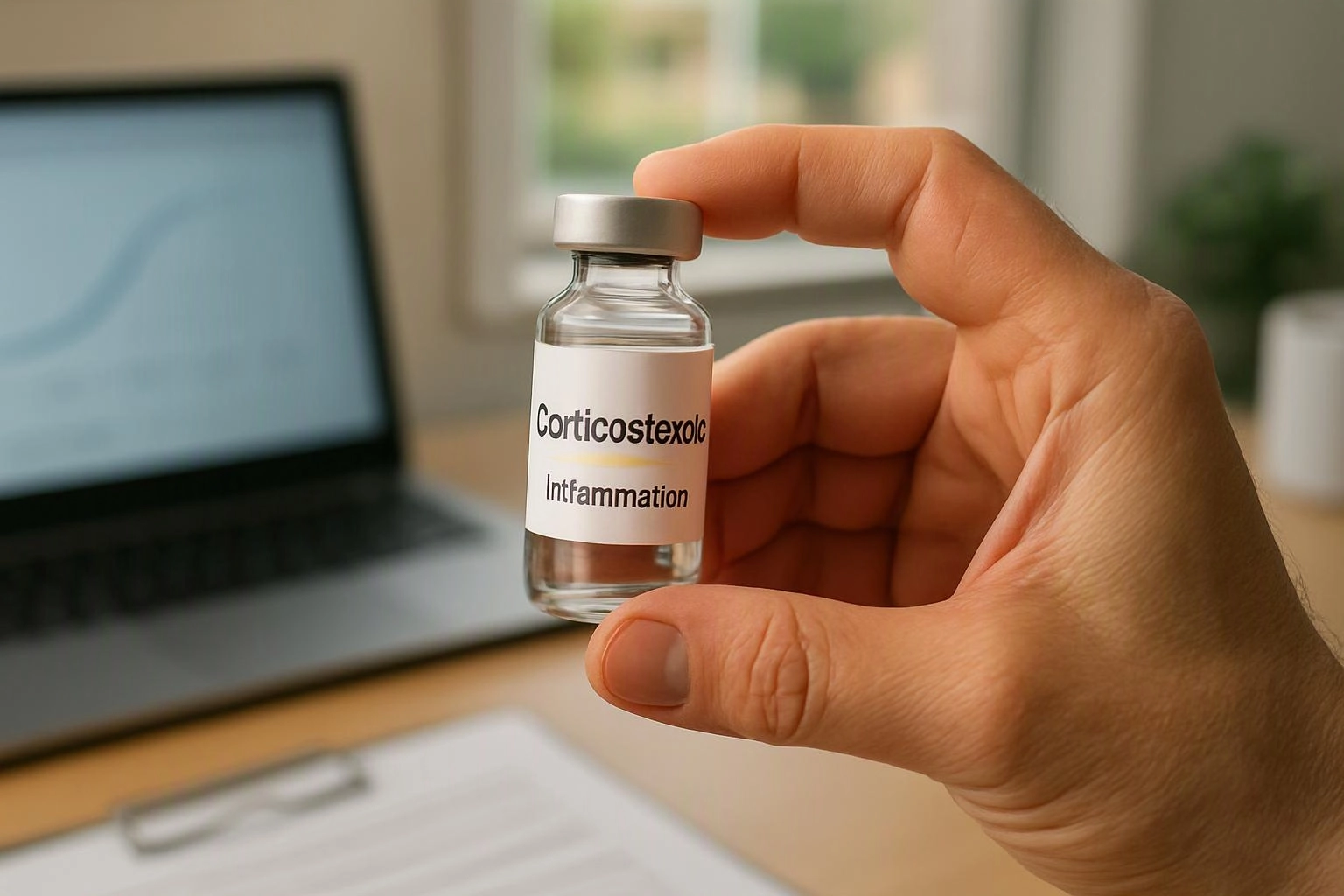
Corticosteroid medicine lowers the body’s inflammatory response near the treatment area. Inflammation can irritate nearby tissue and nerves. Reducing that response may lessen pain linked to swelling and irritation.
Related glossary terms: Lumbar Radiculopathy, Nerve Root, Image Guidance.
For an Epidural Steroid Injection, a clinician places the medicine in the epidural space near spinal nerves. Image guidance helps the clinician direct the needle to the intended area. The injection may contain a local anesthetic, which can numb pain for a short time. The corticosteroid serves a different purpose by calming inflammation.
The treatment targets a specific area, so the result depends on the cause and location of pain. A corticosteroid does not rebuild a damaged disc or remove a bone spur. It is also different from anabolic steroids, which affect muscle growth.

From the Premier Injury Specialists team
When we review an epidural steroid injection, we connect the corticosteroid to the pain pattern and suspected source. Our team also checks the planned treatment area and the role of image guidance. We explain that the medicine targets inflammation, while other parts of the injection may serve different purposes.
Corticosteroid in Practice: A Real-World Example
A person with lumbar radiculopathy may receive an epidural steroid injection near an irritated nerve. The corticosteroid is intended to calm inflammation around that nerve and may reduce related leg pain.
Related Terms
Lumbar Radiculopathy
Lumbar Radiculopathy is a nerve root problem in the lower spine that causes pain, tingling, numbness…
Nerve Root
A nerve root is a short bundle of nerve fibers that leaves the spinal cord through…
Image Guidance
Image Guidance is a technique that uses live medical images to help a clinician see body…
Premier Injury Specialists
Have Questions About Corticosteroid?
Contact Premier Injury Specialists for practical guidance on Corticosteroid and related pain management physician work in Stonecrest.