Medial Branch Block vs Facet Joint Injection for Facet Pain
Facet pain treatment is compared by its target, diagnostic purpose, relief goal, risks, and next step. Premier Injury Specialists uses your symptoms, physical examination, and medical imaging to help select the appropriate option. A medial branch block tests a pain source, while a facet joint injection treats pain within the joint.
Request an EstimateQuick Picks
Medial branch blocks and facet joint injections are different interventional pain procedures. The best fit depends on whether we need to confirm the pain source or treat a painful joint.
- Medial branch block: Best for testing whether facet joints cause your pain and guiding radiofrequency ablation.
- Facet joint injection: Best for targeted treatment of pain or inflammation within a specific facet joint.
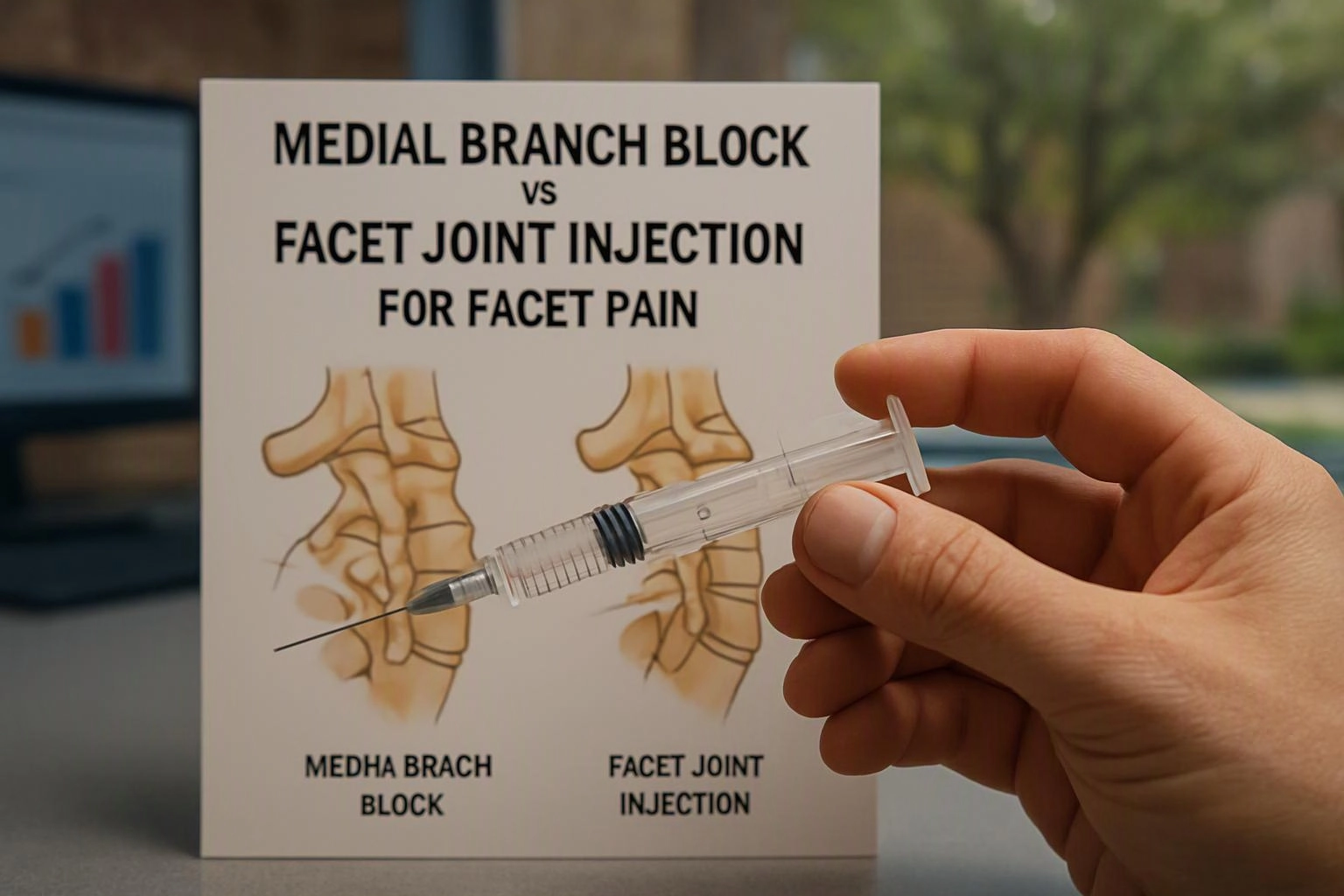
How Do Medial Branch Blocks and Facet Joint Injections Compare?
A medial branch block mainly tests whether facet pain comes from the medial branch nerves. A facet joint injection places medication into or around the painful facet joint.
Both procedures can support a broader spine pain treatment plan. We use the pain pattern, physical examination, and diagnostic testing to guide the choice.
| Factor | Medial Branch Block | Facet Joint Injection |
|---|---|---|
| Primary target | Medial branch nerves that carry facet pain signals | The facet joint or its surrounding capsule |
| Main purpose | Diagnostic pain relief and treatment planning | Treatment of joint pain and inflammation |
| Medication | Usually local anesthetic | Local anesthetic, corticosteroid, or both |
| Cost factors | Procedure type, treated sites, guidance, medication, and coverage | Procedure type, treated sites, guidance, medication, and coverage |
| Best for | Confirming facet-mediated pain and planning radiofrequency ablation | Treating suspected pain within specific facet joints |
A medial branch block may lead to radiofrequency ablation when the diagnostic response supports that plan. A facet joint injection may focus on joint-directed relief.
What Is a Medial Branch Block?
A medial branch block is an injection that temporarily numbs nerves carrying pain signals from facet joints.
The medial branch nerve carries signals from a facet joint to the nervous system. We use local anesthetic as a diagnostic injection to see whether numbing those nerves changes your pain.
Medial Branch Blocks may be considered for cervical or lumbar facet pain when the examination supports that source.
Why Might a Medial Branch Block Be Recommended?
A medial branch block may be recommended when diagnostic pain relief could clarify the next treatment decision. We compare your response with your symptoms and examination findings.
Who Is a Medial Branch Block Best For?
A medial branch block is best for people whose symptoms and examination suggest facet-mediated pain and who may need diagnostic guidance for radiofrequency ablation.
Common patterns include axial back pain or neck pain without a clear pattern of symptoms from another spinal structure. We also consider prior treatment and the response to earlier care.
What Is a Facet Joint Injection?
A facet joint injection is an injection into or around a painful facet joint to help reduce inflammation and pain.
The facet joint capsule surrounds the joint and can become painful with spinal arthritis or other joint changes. A facet joint injection uses local anesthetic, corticosteroid, or both, depending on the treatment plan.
Facet Joint Injections can target spinal joint pain in the neck or back. We use imaging guidance to place the needle at the intended site.
What Are the Advantages of a Facet Joint Injection?
A facet joint injection can offer direct treatment when joint inflammation appears to be part of the pain source. We match the injection to the suspected joint and your treatment goals.
Who Is a Facet Joint Injection Best For?
A facet joint injection is best for people whose symptoms point to pain or inflammation within specific facet joints.
Facet joint pain may occur with spinal arthritis or irritation around the joint capsule. We use a targeted injection when the pain location and examination support that approach.
Which Procedure Is Better for Facet Pain?
Neither procedure is always better because the right choice depends on whether the goal is diagnostic testing, joint treatment, or planning longer-lasting care.
A medial branch block is usually more useful when we need to test the nerves linked to facet pain. A facet joint injection may fit better when the joint itself appears to be the treatment target.
Your pain pattern, physical examination, imaging, and prior response to treatment help us choose the more suitable injection.
How We Choose Between These Facet Pain Injections
We choose between these injections by matching your pain pattern, examination findings, imaging, and treatment goals to the suspected pain source.
Our team reviews where your pain starts, what movements worsen it, and how earlier care worked. Medical imaging can show joint changes, but imaging alone doesn't prove that a facet joint causes pain.
We also consider the number of suspected treatment sites, your medical history, medication use, and whether radiofrequency ablation may be part of future planning.
What Happens After a Medial Branch Block?
A medial branch block is followed by symptom tracking, review of the diagnostic response, and a follow-up assessment.
A pain diary can make your follow-up visit more useful. We focus on both pain intensity and function during the period after the injection.
What Changes the Cost of These Procedures?
The cost depends on the procedure selected, the treatment sites, clinical needs, and coverage details; we explain what our quote includes during a Free Consultation.
Cost drivers can include procedure type, number of treated sites, imaging guidance, medication used, and insurance coverage. A medial branch block and a facet joint injection may have different billing details because they target different structures.
We review the planned service and coverage information with you before treatment. You can request an exact quote through our Free Consultations.
What Risks Should You Discuss Before an Injection?
Injection risks can include temporary soreness, bleeding, infection, medication reactions, and nerve irritation, so we review your health history first.
We ask about blood-thinning medication, allergies, infection symptoms, diabetes, and other conditions that may affect planning. We also explain warning signs that need prompt medical attention after treatment.
Call our team if pain becomes severe, new weakness develops, or you notice signs of infection after an injection.
Common Questions About Medial Branch Blocks and Facet Injections
Can a medial branch block lead to radiofrequency ablation?
Yes, a medial branch block can lead to radiofrequency ablation when the diagnostic response supports facet-mediated pain. Premier Injury Specialists reviews your pain diary, examination, and follow-up findings before discussing that next step.
Are medial branch blocks and facet joint injections the same procedure?
No, medial branch blocks and facet joint injections target different structures. A medial branch block targets nerves linked to the facet joint, while a facet joint injection targets the joint or its surrounding capsule.
Can facet joint injections treat neck and back pain?
Yes, facet joint injections can treat suspected facet joint pain in the neck or back. We select cervical or lumbar treatment based on the pain location, examination, imaging, and treatment goals.
What should I tell the pain physician before a facet injection?
Tell the pain physician about your symptoms, medicines, allergies, medical conditions, prior injections, and treatment response. We also need to know about blood thinners, infection symptoms, and any new weakness or numbness.
How We Help With Facet Pain Treatment
Premier Injury Specialists connects your symptoms, examination, imaging, and treatment goals to a focused care plan. We explain whether a medial branch block or facet joint injection better fits the suspected pain source.
Our team also reviews procedure risks, cost factors, and possible next steps before treatment. Contact us to discuss your facet pain treatment options.