
What Is a Nerve Conduction Study?
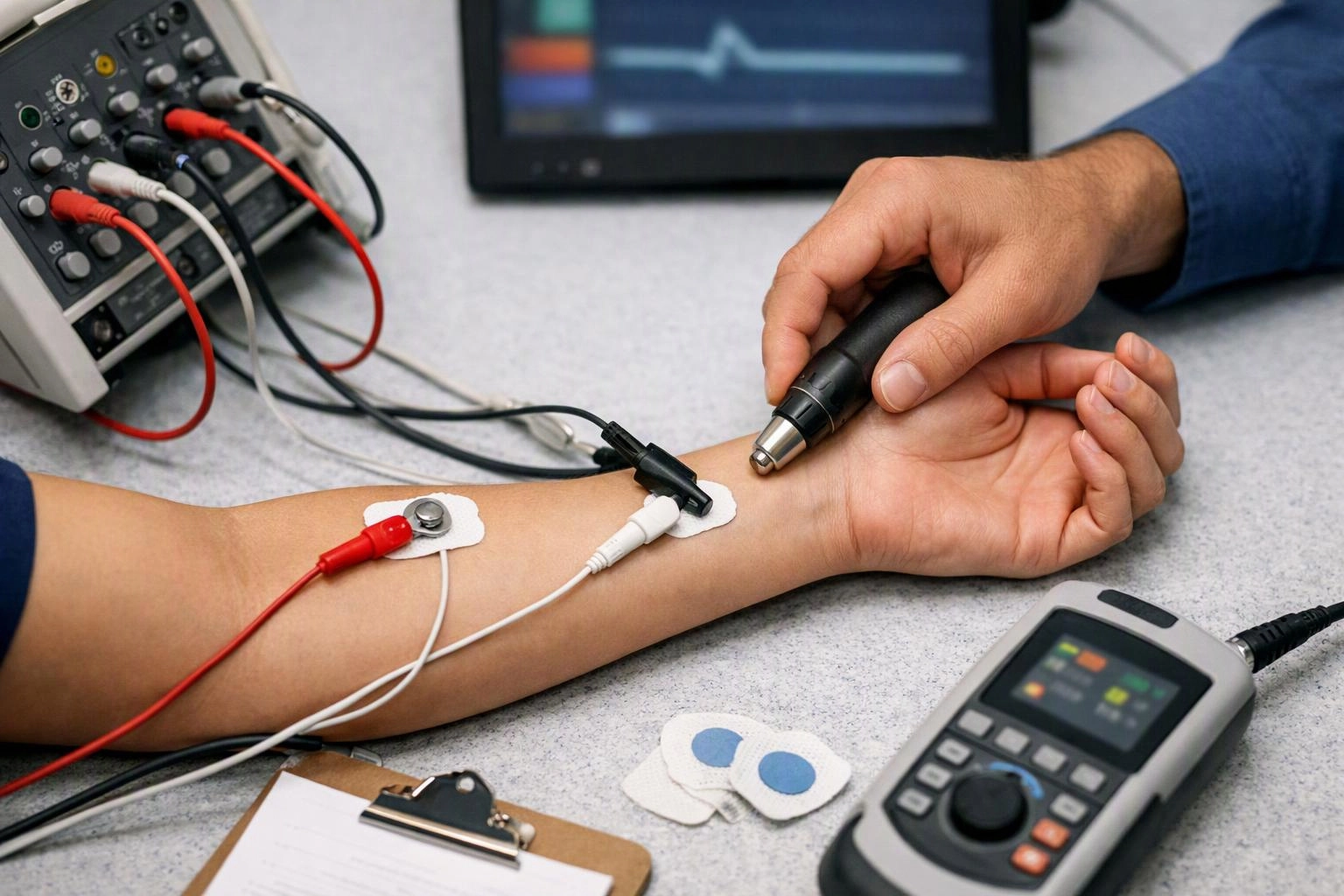
A Nerve Conduction Study is a diagnostic test that measures how well electrical signals travel through peripheral nerves. Small electrical pulses stimulate a nerve, and sensors record the signal’s speed and strength. The results can help identify nerve damage, compression, or reduced nerve function linked to symptoms such as numbness, tingling, or weakness.
Quick Facts About Nerve Conduction Study
Category
Diagnostic nerve test
Used for
Nerve damage and compression
Common confusion
Different from an EMG
Also called
NCS, nerve conduction test
Often discussed with
Neuropathy Treatment
Key Takeaways About Nerve Conduction Study
- The test measures nerve signal speed and strength.
- Sensors help locate nerve problems along an affected limb.
- It is not the same as a muscle test.
How Nerve Conduction Study Works

A Nerve Conduction Study sends a mild electrical pulse along a selected nerve. Sensors placed on the skin record how quickly and strongly the signal reaches its target. The clinician compares the recorded response with the person’s symptoms and physical examination.
Related glossary terms: Neuropathic Pain, Nerve Root, Lumbar Radiculopathy.
Slower signals or weaker responses may point to a problem along the nerve. The pattern can help show whether symptoms relate to nerve compression, general nerve damage, or another cause. A nerve conduction study checks nerve signals, while an electromyogram checks electrical activity in muscles. Clinicians may order both tests when nerve and muscle symptoms overlap.
From the Premier Injury Specialists team
When we assess neuropathy symptoms, we review the study findings alongside the person’s exam and symptom pattern. Our team looks for agreement between numbness, tingling, weakness, and the nerve pathway involved. That context helps us discuss whether the findings support a neuropathy treatment plan.
Nerve Conduction Study in Practice: A Real-World Example
A person with persistent foot tingling may have a Nerve Conduction Study to check how signals travel through the leg and foot nerves. The findings can help the clinician connect the symptoms with possible peripheral nerve damage or compression.
Related Services
Related Terms
Neuropathic Pain
Neuropathic Pain is pain caused by damage, irritation, or abnormal signaling in the nerves. The pain…
Nerve Root
A nerve root is a short bundle of nerve fibers that leaves the spinal cord through…
Lumbar Radiculopathy
Lumbar Radiculopathy is a nerve root problem in the lower spine that causes pain, tingling, numbness…
Pain Threshold
Pain Threshold is the point at which a person first notices a stimulus as painful. The…
Premier Injury Specialists
Have Questions About Nerve Conduction Study?
Contact Premier Injury Specialists for practical guidance on Nerve Conduction Study and related pain management physician work in Stonecrest.