
What Is Cervical Spine?
Cervical Spine is the upper section of the spinal column in your neck. It supports the head, allows neck movement, and protects the spinal cord as it travels between the brain and body. The cervical spine also contains joints, discs, bones, muscles, and nerve roots that can contribute to neck pain.
Quick Facts About Cervical Spine
Category
Spinal region
Used for
Describing neck anatomy and pain sources
Common confusion
It is not the entire spine
Also called
Neck Spine
Often discussed with
Neck Pain Treatment, Whiplash Treatment
Key Takeaways About Cervical Spine
- It forms the neck portion of the spinal column.
- Its joints and nerves can contribute to neck symptoms.
- The cervical spine differs from the lumbar spine in location.
How Cervical Spine Works
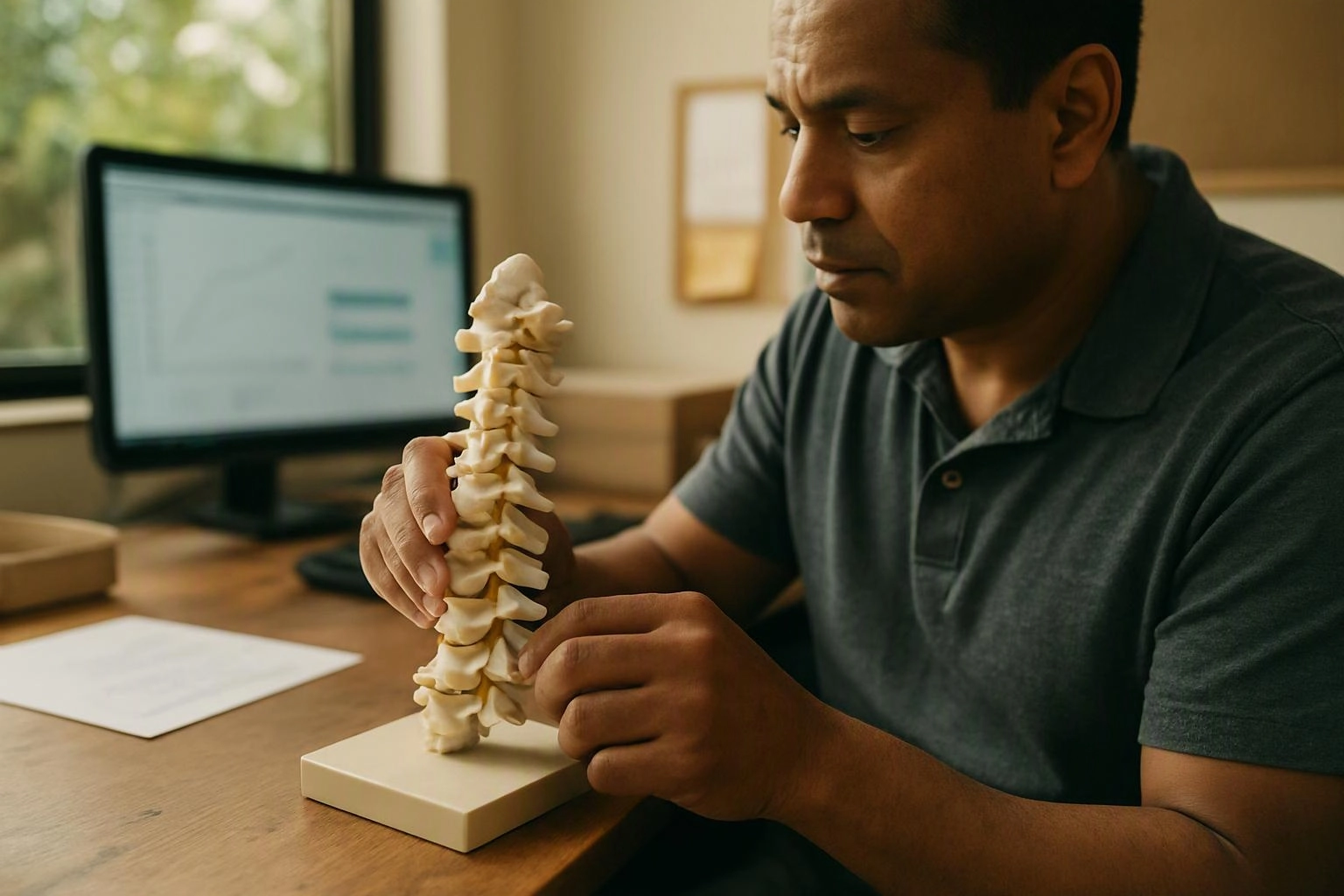
Cervical Spine describes the neck region of the spinal column. Its bones form a mobile support for the head, while discs and small joints help guide movement. Ligaments and muscles add stability during turning, bending, and other neck motions.
Related glossary terms: Facet Joint, Nerve Root, Spinal Cord.
The spinal cord passes through the center of the cervical spine. Nerve roots leave the spine through openings and travel toward the shoulders, arms, and hands. A clinical evaluation may include a review of pain location, movement, strength, sensation, and reflexes. Imaging can show changes in bones, discs, or joints.
Neck Pain Treatment may focus on the structure linked to your symptoms, such as a disc, facet joint, or nerve root. The cervical spine can also be involved in whiplash-related pain and certain headache patterns.
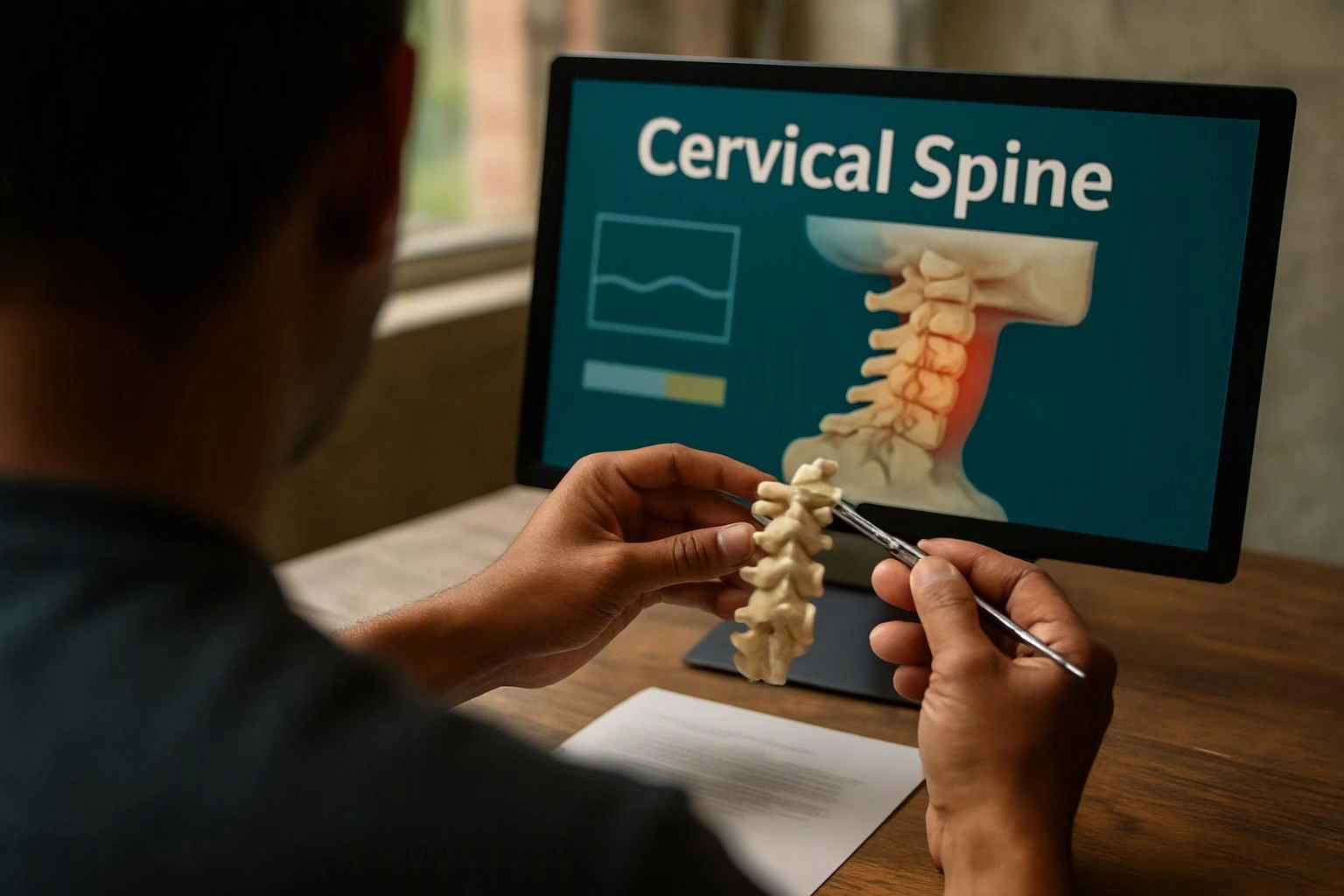
From the Premier Injury Specialists team
When we assess the cervical spine, we connect your pain pattern with neck movement, strength, sensation, and reflex findings. We also review relevant imaging when available. Our team uses those details to distinguish pain linked to joints, discs, muscles, or irritated nerve roots.
Cervical Spine in Practice: A Real-World Example
A person with neck pain after a vehicle collision may have pain when turning the head and tingling toward the hand. During Neck Pain Treatment, the clinician examines movement and nerve function to identify which cervical spine structures may be involved.
Related Services
Related Terms
Facet Joint
A Facet Joint is a small connection between the bones at the back of the spine…
Nerve Root
A nerve root is a short bundle of nerve fibers that leaves the spinal cord through…
Spinal Cord
Spinal Cord is a long bundle of nerve tissue that carries messages between the brain and…
Premier Injury Specialists
Have Questions About Cervical Spine?
Contact Premier Injury Specialists for practical guidance on Cervical Spine and related pain management physician work in Stonecrest.