
What Is Cauda Equina Syndrome?
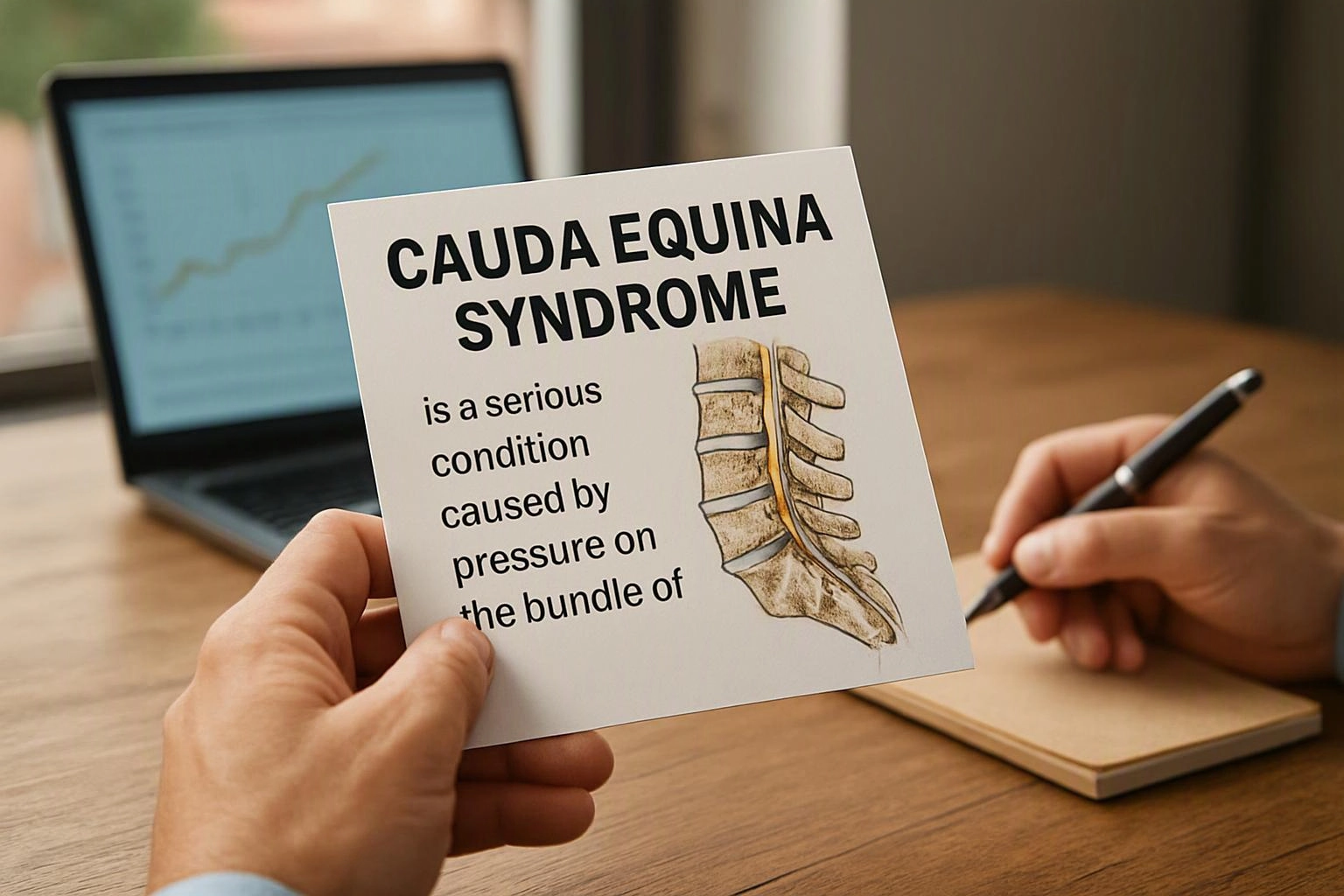
Cauda Equina Syndrome is a serious condition caused by pressure on the bundle of nerves below the spinal cord. The pressure can affect feeling and movement in the legs, bladder and bowel control, and sexual function. Severe spinal stenosis, a herniated disc, bleeding, or other problems can cause this pressure.
Quick Facts About Cauda Equina Syndrome
Category
Spinal nerve emergency
Used for
Recognizing severe nerve compression
Common confusion
Severe sciatica is not always cauda equina syndrome
Also called
CES
Often discussed with
Spinal Stenosis Treatment
Key Takeaways About Cauda Equina Syndrome
- It affects nerves below the end of the spinal cord.
- New bladder or bowel changes need prompt medical assessment.
- It is not the same as ordinary low back pain.
How Cauda Equina Syndrome Works
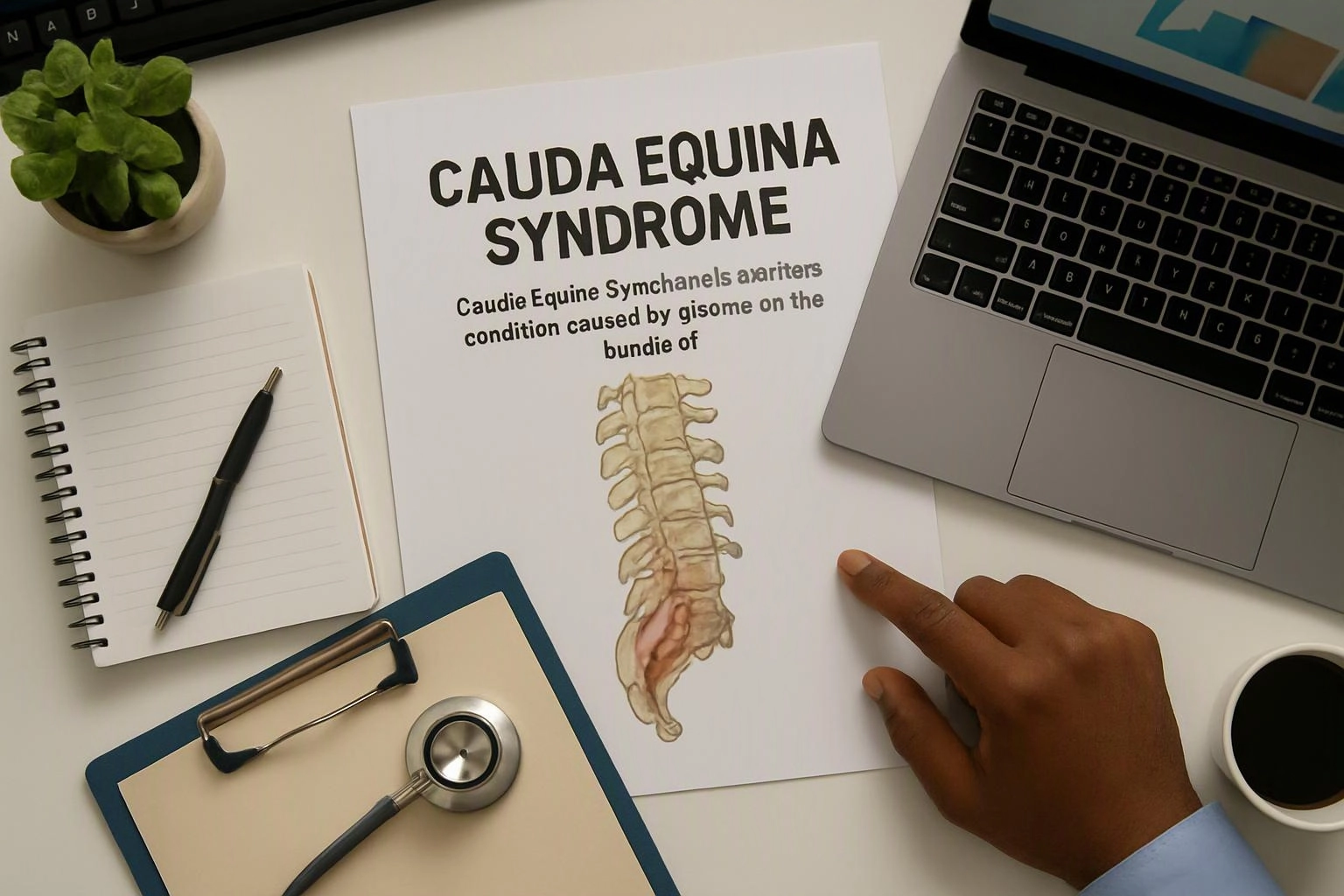
Cauda Equina Syndrome develops when pressure affects the group of nerve roots below the spinal cord. These nerves carry signals between the lower back, legs, pelvic organs, and skin around the inner thighs.
Related glossary terms: Spinal Cord, Lumbar Spine, Lumbar Radiculopathy.
Spinal stenosis can narrow the space around these nerves. A disc problem, swelling, bleeding, or a growth can also create pressure. Symptoms may include worsening leg weakness, numbness in the saddle area, and changes in bladder or bowel control.
Doctors assess the pattern and change of symptoms through a neurological examination. Imaging can show whether the spinal canal or nerve space is narrowed. Spinal stenosis and lumbar radiculopathy may cause related symptoms, but they do not always involve the same level of nerve pressure.
From the Premier Injury Specialists team
When we evaluate spinal stenosis, we ask about changes in leg strength, sensation, and bladder or bowel function. Our team treats those findings as clinically urgent and coordinates prompt medical evaluation when the pattern suggests severe nerve compression.
Cauda Equina Syndrome in Practice: A Real-World Example
A person with spinal stenosis develops worsening leg weakness and numbness around the inner thighs. New trouble controlling the bladder or bowel raises concern for Cauda Equina Syndrome and calls for prompt medical evaluation.
Related Services
Related Terms
Spinal Cord
Spinal Cord is a long bundle of nerve tissue that carries messages between the brain and…
Lumbar Spine
Lumbar Spine is the lower section of the backbone between the chest and pelvis. It contains…
Lumbar Radiculopathy
Lumbar Radiculopathy is a nerve root problem in the lower spine that causes pain, tingling, numbness…
Nerve Root
A nerve root is a short bundle of nerve fibers that leaves the spinal cord through…
Premier Injury Specialists
Have Questions About Cauda Equina Syndrome?
Contact Premier Injury Specialists for practical guidance on Cauda Equina Syndrome and related pain management physician work in Stonecrest.