
What Is Axial Pain?
Axial Pain is pain centered in the spine or nearby supporting tissues, such as the neck muscles, joints, or ligaments. The discomfort usually stays near its source and may feel aching, stiff, or sore. It differs from radicular pain, which follows an irritated nerve into an arm or leg.
Quick Facts About Axial Pain
Category
Spine-related pain pattern
Used for
Neck and back pain assessment
Common confusion
Pain that travels along a nerve
Also called
Axial neck pain, Spinal axial pain
Often discussed with
Neck Pain Treatment
Key Takeaways About Axial Pain
- Pain stays near the spine instead of following a nerve path.
- Neck stiffness and soreness can reflect axial pain.
- Axial pain is not the same as sciatica or radicular pain.
How Axial Pain Works
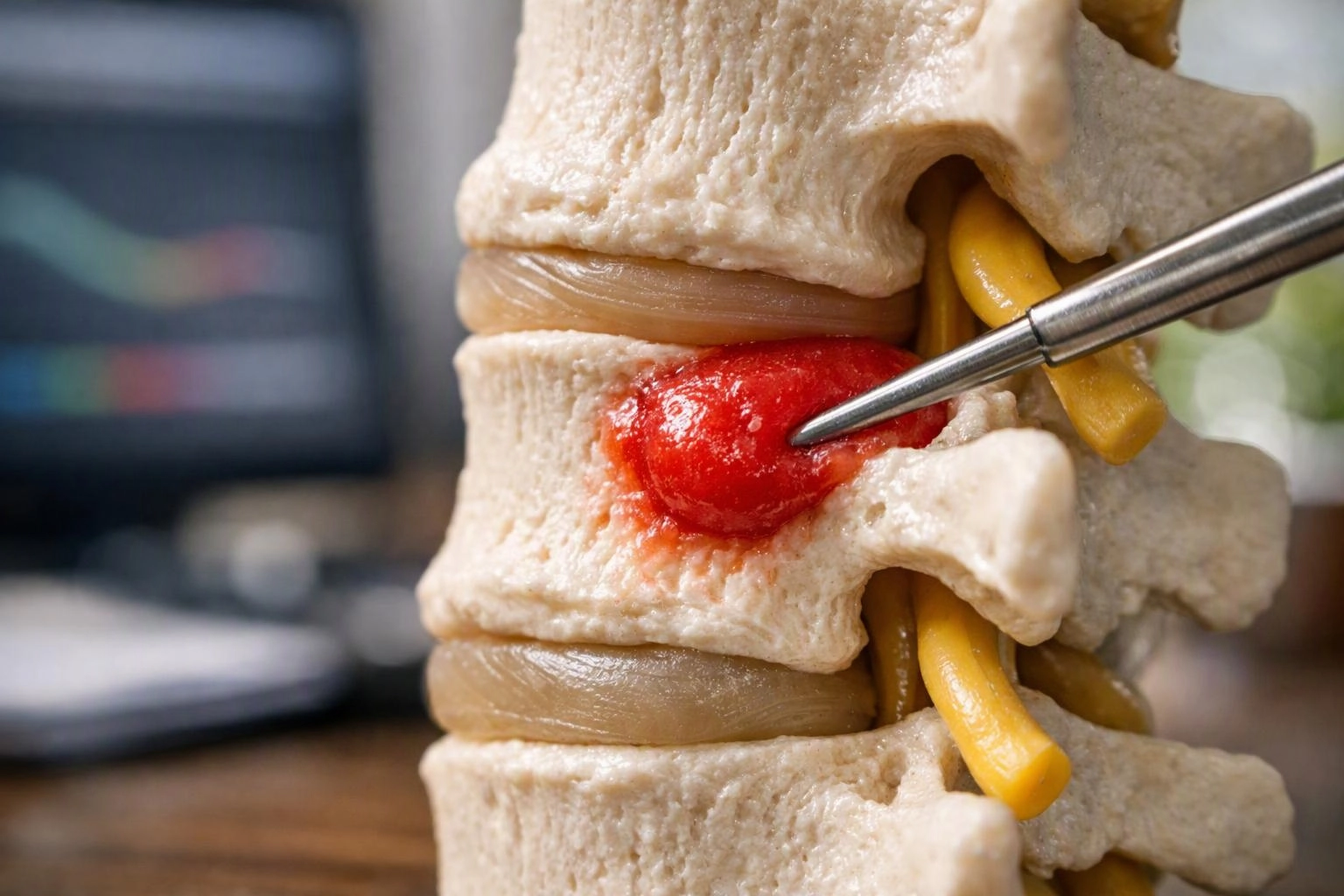
Axial pain begins when pain-sensitive tissues around the spine send signals to the nervous system. These tissues may include facet joints, discs, muscles, ligaments, or the joint lining. The brain then recognizes discomfort in the neck or back area.
Related glossary terms: Cervical Spine, Facet Joint.
Clinicians assess the pain's location, quality, and movement pattern. They also ask whether symptoms spread into an arm or leg. Pain that stays near the neck supports an axial pattern, while burning, tingling, or weakness may point toward nerve involvement.
Cervical spine problems can produce axial neck pain during turning, looking up, or holding the head still. A pain diary can help show which movements or positions change symptoms over time.

From the Premier Injury Specialists team
When we assess axial pain, we map where the neck discomfort starts and whether it travels into an arm. We also review movement limits, tenderness, and changes in symptoms during daily activities. Our team uses these findings to separate local neck pain from signs of nerve involvement.
Axial Pain in Practice: A Real-World Example
A person develops neck pain after a vehicle collision. The soreness stays across the back of the neck and worsens when turning the head, without traveling into the hand.
Related Services
Related Terms
Cervical Spine
Cervical Spine is the upper section of the spinal column in your neck. It supports the…
Facet Joint
A Facet Joint is a small connection between the bones at the back of the spine…
Premier Injury Specialists
Have Questions About Axial Pain?
Contact Premier Injury Specialists for practical guidance on Axial Pain and related pain management physician work in Stonecrest.