
What Is the Sympathetic Nervous System?
The sympathetic nervous system is a part of the autonomic nervous system that prepares your body to respond to stress, pain, or danger. It can raise alertness, change blood flow, increase heart activity, and affect sweating. In some pain conditions, abnormal sympathetic activity may help maintain burning or color-changing pain.
Quick Facts About Sympathetic Nervous System
Category
Part of the autonomic nervous system
Used for
Understanding automatic stress and pain responses
Common confusion
It differs from sensory nerves that detect injury
Also called
Sympathetic Nerve System, Sympathetic division
Often discussed with
Sympathetic Nerve Block
Key Takeaways About Sympathetic Nervous System
- It controls automatic responses linked to stress and danger.
- Its activity can influence blood flow, sweating, and pain signals.
- It isn't the same as the sensory nerves that detect pain.
How Sympathetic Nervous System Works

The sympathetic nervous system sends automatic signals from the brain and spinal cord to organs, blood vessels, and glands. These signals help your body respond quickly to stress. They can change heart activity, blood flow, sweating, and digestion.
Related glossary terms: Neuropathic Pain, Pain Threshold, Spinal Cord.
In some pain disorders, sympathetic signals may affect how pain feels or continues after an injury. A clinician reviews symptoms, skin temperature, color, sweating, and blood flow patterns. The findings may support a diagnosis, but no single sign proves that sympathetic activity causes pain.
A sympathetic nerve block places medicine near nerves that carry these automatic signals. The procedure can help test whether those nerves contribute to pain and may provide temporary relief. Image guidance may help the clinician place the needle accurately.
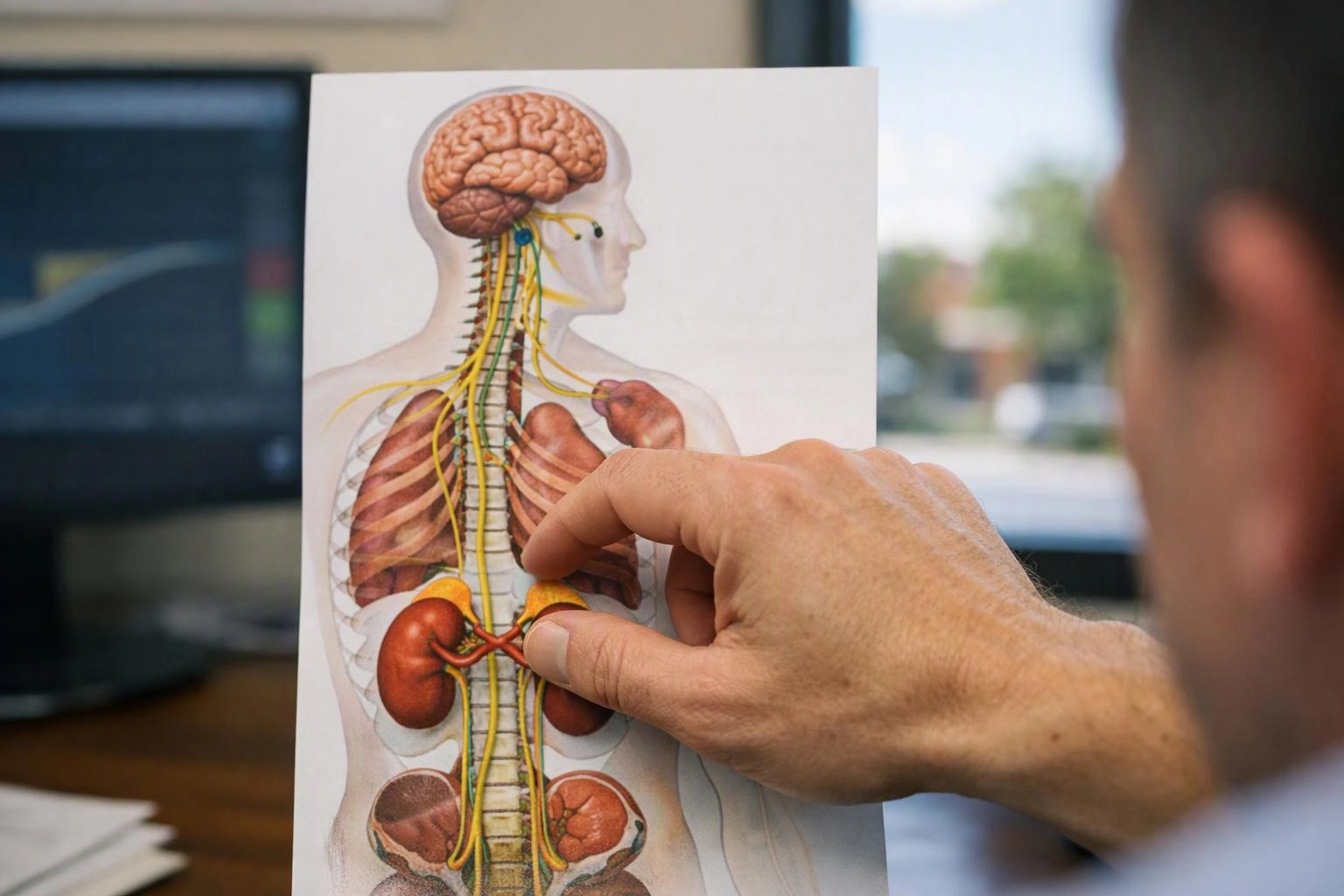
From the Premier Injury Specialists team
When we assess pain that may involve sympathetic activity, we review the pain pattern, skin changes, temperature, and response to movement. We also compare those findings with the medical history and examination before considering a sympathetic nerve block.
Sympathetic Nervous System in Practice: A Real-World Example
A person with complex regional pain syndrome may have burning pain, unusual sweating, and a hand that looks warmer or cooler than the other hand. A sympathetic nerve block may help test whether sympathetic signals contribute to those symptoms.
Related Services
Related Terms
Neuropathic Pain
Neuropathic Pain is pain caused by damage, irritation, or abnormal signaling in the nerves. The pain…
Pain Threshold
Pain Threshold is the point at which a person first notices a stimulus as painful. The…
Spinal Cord
Spinal Cord is a long bundle of nerve tissue that carries messages between the brain and…
Visceral Pain
Visceral Pain is a type of pain that comes from internal organs or the tissues around…
Premier Injury Specialists
Have Questions About Sympathetic Nervous System?
Contact Premier Injury Specialists for practical guidance on Sympathetic Nervous System and related pain management physician work in Stonecrest.