
What Is Chronic Pain?
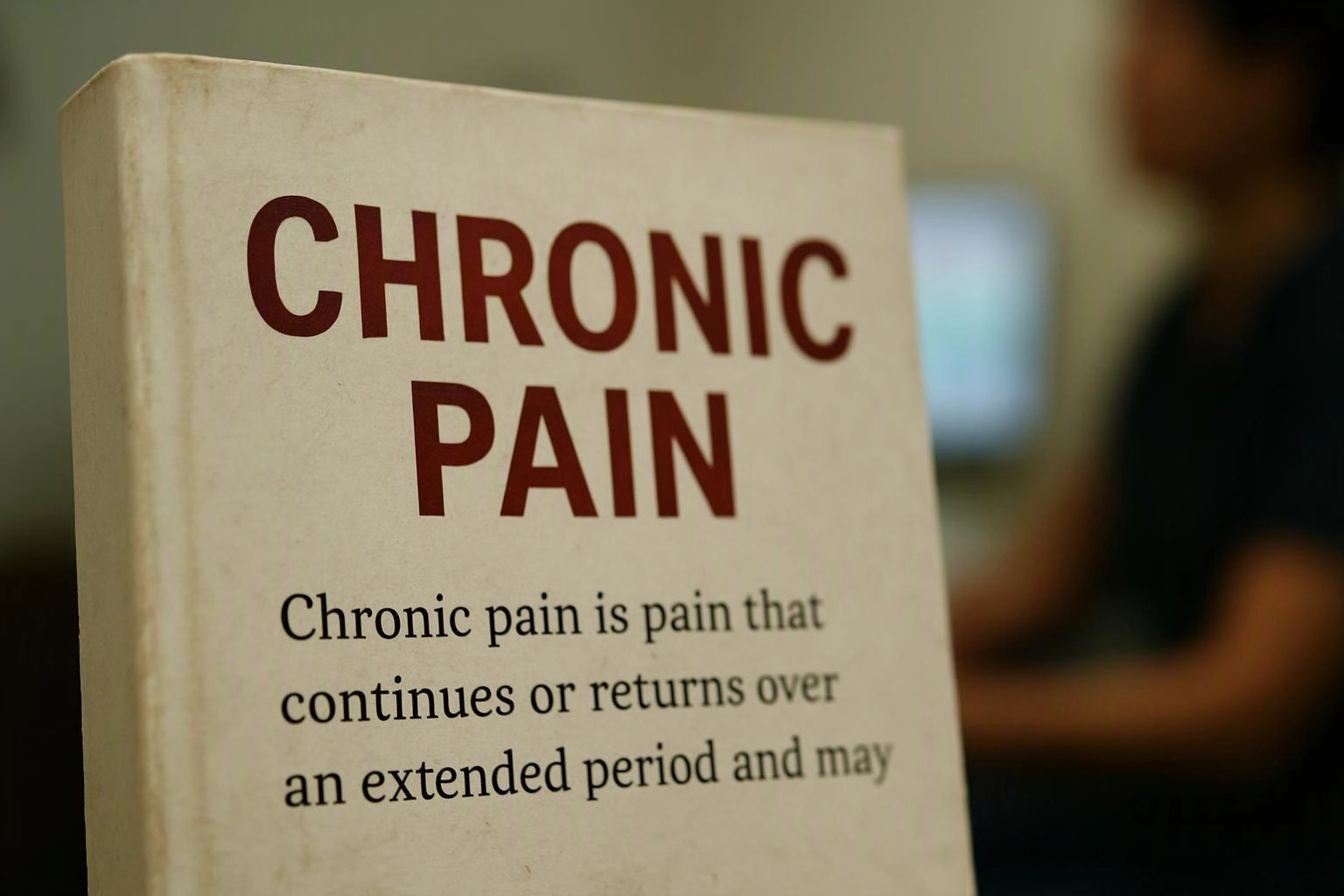
Chronic Pain is pain that continues or returns over an extended period and may remain after an injury or illness changes. Chronic Pain can involve tissue irritation, nerve signals, or changes in how the nervous system processes pain. Doctors assess its pattern, cause, effect on daily life, and response to treatment.
Quick Facts About Chronic Pain
Category
Pain condition
Used for
Ongoing or recurring pain assessment
Common confusion
Chronic does not always mean severe
Also called
Persistent Pain, Long-Term Pain
Often discussed with
Cancer Pain Management
Key Takeaways About Chronic Pain
- Chronic Pain may continue after the original injury or illness changes.
- Pain patterns help doctors identify possible causes and treatment needs.
- Chronic Pain is not the same as severe pain that started recently.
How Chronic Pain Works

Chronic Pain involves pain signals that keep affecting the body after the original problem changes. The source may involve tissue, nerves, organs, or the way the nervous system processes signals. Pain may feel aching, burning, sharp, or pressure-like.
Related glossary terms: Acute Pain, Neuropathic Pain, Nociceptive Pain.
Doctors study the pain's location, pattern, triggers, and effect on sleep or movement. A pain diary can show changes across daily activities. A pain scale can help describe intensity, but the full pattern gives more useful context.
With cancer-related pain, the pain may come from the tumor, treatment, or another condition. Neuropathic Pain may feel like burning or tingling. Nociceptive Pain often comes from irritated or damaged body tissue.
From the Premier Injury Specialists team
When we assess Chronic Pain during cancer pain management, we review its location, pattern, triggers, and effect on daily activities. We also consider the cancer, related treatments, and other health conditions. Our team uses the full pain history to guide a focused clinical plan.
Chronic Pain in Practice: A Real-World Example
A person receiving cancer treatment may report burning pain near the treatment area that returns during movement. The care team records the pattern and checks whether the pain suggests nerve involvement, tissue irritation, or another cause.
Related Services
Related Terms
Acute Pain
Acute Pain is a short-term pain response that starts suddenly after an injury, illness, surgery, or…
Neuropathic Pain
Neuropathic Pain is pain caused by damage, irritation, or abnormal signaling in the nerves. The pain…
Nociceptive Pain
Nociceptive Pain is pain caused by signals from damaged, irritated, or inflamed body tissues. These signals…
Pain Diary
A Pain Diary is a written or digital record of pain symptoms, daily activities, treatments, and…
Premier Injury Specialists
Have Questions About Chronic Pain?
Contact Premier Injury Specialists for practical guidance on Chronic Pain and related pain management physician work in Stonecrest.